What is COCSA or child-on-child sexual abuse?
You might have heard the term COCSA before. We get lots of questions from people wondering if the way that they behaved when they were younger could be considered COCSA. We think it’s important to be really clear about what COCSA means, what situations can be considered COCSA, and the reasons why this term may not always accurately capture the complexity and developmental nature of children and youth’s sexual behaviors.
What does COCSA mean?
COCSA is an acronym for child-on-child sexual abuse. It is a term most often used in clinical or judicial settings to describe inappropriate or abusive sexual behaviors from one child towards another. But the term COCSA is also often used online by people who might be talking about their own experiences as a kid — either experiencing sexual abuse from another child, or to describe their own behaviors towards another child. And it is important that people feel like they are allowed to describe their experiences in a way that makes sense to them!
But, COCSA is not a term that we typically use to describe child-to-child abusive sexual behaviors. And there are other professionals in the field who also prefer to use other terms to more accurately describe children and youth sexual behaviors.
Why don’t we use the term COCSA?
There are certainly instances where a child can behave in ways that can cause sexual harm towards another child. But we also know that children’s sexual behaviors are very different from adults, and the reasons why they may cross a sexual boundary are also very different. From a developmental perspective, children don’t have the same understanding about sexual behaviors that adults do. And for these reasons, we do not label children as “abusers” or “offenders”. The needs of children and youth who are struggling with their sexual behaviors are unique and varied. Labeling a child or using punitive approaches does not work. Young people need support, developmentally and age-appropriate information, and professional resources to help them learn safe behaviors.
What terms do we prefer instead of COCSA?
COCSA can feel for many people like a harsh and labeling term. And when people don’t fully understand the meaning or context of this term, it can be applied to situations that may not actually fit. Our helpline, and many other professionals in the field, have moved towards using terms like “harmful” or “problematic” sexual behaviors in youth (HSBY or PSBY) to describe situations where a child or youth behaves in a way that is sexually harmful.
What can PSBY look like?
Children and youth’s sexual behaviors exist on a spectrum — from developmentally, age-appropriate mutual sexual behaviors to those that cross a line and are considered problematic or harmful. The National Center on the Sexual Behavior of Youth (NCSBY) provides a good explanation about what types of sexual behaviors could be considered problematic or harmful. These types of behaviors could also be described as COCSA. However, similar to our helpline, NCSBY doesn’t use that term to describe these behaviors.
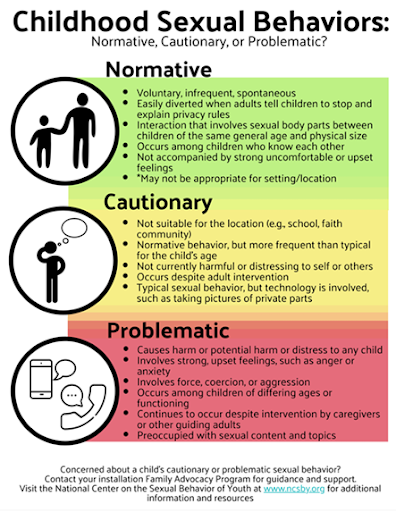
A list of youth sexual behaviors that are not considered COCSA
Not all sexual behaviors between children will fall under the umbrella of COCSA. Sometimes, sexual behaviors or touching between kids are considered inappropriate instead of abusive. For example, sexual behaviors that are:
Child-like
Mutual
Based in curiosity or exploration
Between children around the same age
Not accompanied by distressing feelings from either child
A good example of this may be two siblings around the same age who are playing “doctor” and may show or ask to see or touch each other's body parts.
A list of youth sexual behaviors that can be considered COCSA
When people are using the term COCSA, they are more likely referring to behaviors from one child to another when:
There is a large age gap between them (or some other power dynamic)
The behaviors are not mutual (and could involve a level of coercion, manipulation, or threat)
The behaviors are more mature than expected for children that age
It involves distressing feelings (such as anger, fear, or anxiety)
The behaviors continue to happen despite redirection from youth or adults around them.
COCSA can also be used to describe illegal sexual behaviors using technology, like asking another kid to send nude or sexualized pictures, or showing a younger child pornography.
Are those who engage in PSBY bad kids?
No, children who engage in COCSA or who cross sexual boundaries with another child are not “bad kids.” Often, there is something else going on for a child that is making it difficult for them to understand safe behaviors. And this isn’t to dismiss or excuse these behaviors. Children and youth can absolutely cause harm to another kid, regardless of whether or not the child intended to harm. Experiencing sexual harm or abuse, especially as a child, can impact a person in many ways, even into adulthood. But when a young person is struggling with their sexual behaviors, they need access to age-appropriate resources, information, and ongoing support.
Where can young people find support after engaging in PSBY or experiencing COCSA?
No matter whether you have engaged in COCSA or you have experienced harm or abuse yourself, there is absolutely help and support available.
These blogs can help answer some questions you might have about finding a therapist with the right experience and training to support you around your concerns. There are compassionate, understanding professionals who want to help! And who can come from a place of non-judgement.
I have some questions about getting therapy as a youth or young adult
Where can I find counseling as a youth to address concerning sexual behaviors?
Our helpline consultants are also here to help you understand more about your own or another person’s sexual behaviors, and help you take the next steps towards healing.